PowerMatchLabCompare · Calculate · Choose smarter

Best Power Stations for Refrigerator Backup

For a fridge or freezer, prioritize a verified surge rating well above the compressor's startup spike and roughly 1,000-1,600 Wh of usable capacity per day of outage — the shortlist and comparison table below rank the catalog on exactly those fields.

Keeping food cold through an outage is a focused job: handle the compressor's startup surge, then supply roughly 1,000-1,600 Wh per day for as long as the power is out.

This page covers battery-based portable power stations, not fuel-burning generators. A power station runs silently, indoors, with no exhaust, no fuel to store, and no fumes — it stores a fixed amount of energy (its Wh capacity) and needs recharging (wall, car, or solar) once that runs out. A fuel generator can run indefinitely on stored gasoline or propane but must run outdoors, away from windows and doors, because of carbon monoxide risk, and needs fuel stored and rotated. For a single fridge or freezer during a typical outage, a correctly-sized power station is usually enough and avoids the fuel and ventilation logistics entirely; a fuel generator becomes the more practical choice mainly for loads or outage durations well beyond what a station's battery capacity can cover.

Top picks for Refrigerator Backup

These picks are focused on the U.S. market. Before buying, confirm plug type, voltage (120V), warranty terms, and regional availability on the Amazon listing — especially if you are ordering to another country.

Best overall
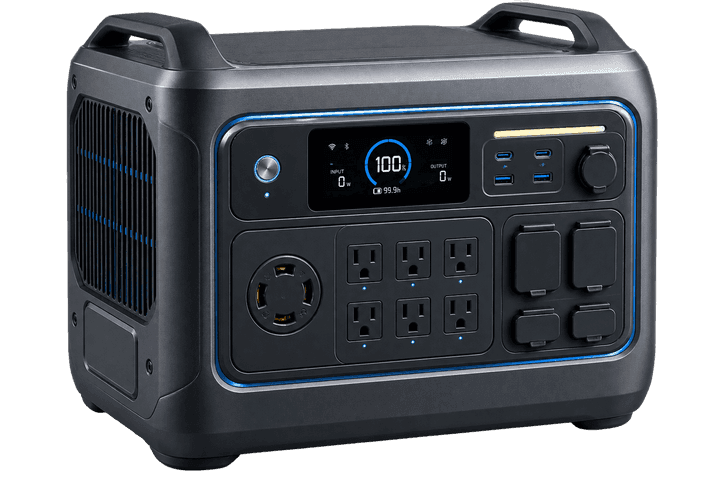
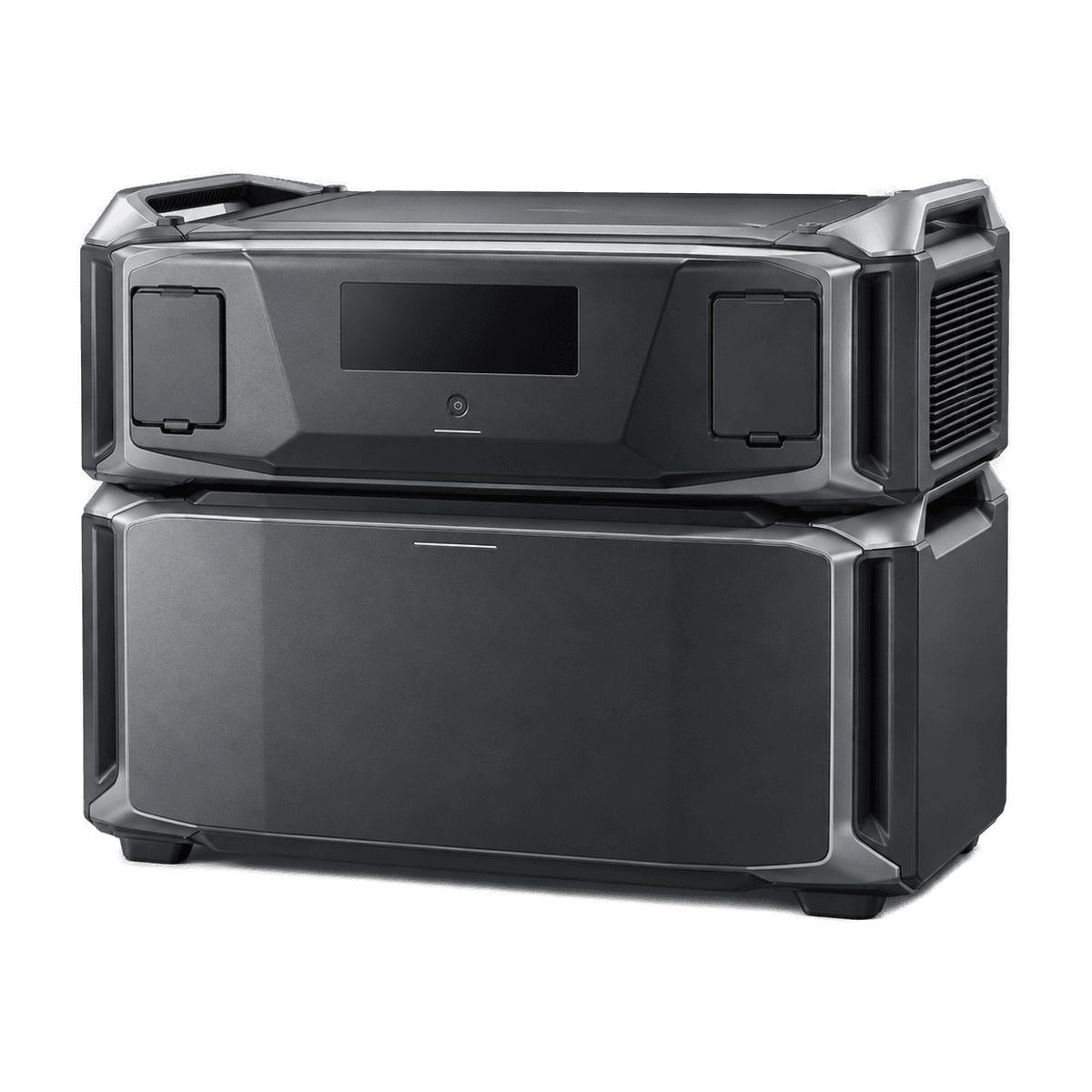
Original illustrative render representing a large portable power station — not an exact photograph of the Anker SOLIX C2000 Gen 2.

Illustrative image — not an exact product photograph.

Anker SOLIX

C2000 Gen 2

Capacity
2,048 Wh
Output
2,400 W
Weight
41.7 lb (18.9 kg)

Best for: RV, refrigerator backup, home essentials, camping

View product
Check Price on Amazon

Price, availability and current rating are shown on Amazon — PowerMatchLab does not display them because we have not independently verified them. As an Amazon Associate we may earn from qualifying purchases.
Highest-ranked match for this use, weighing capacity, output and standby draw together (PowerMatch Score 61).

Estimated ~11.6 hours running a full-size refrigerator (~150 W average draw) — a planning calculation, not a lab measurement.

Best for long outages
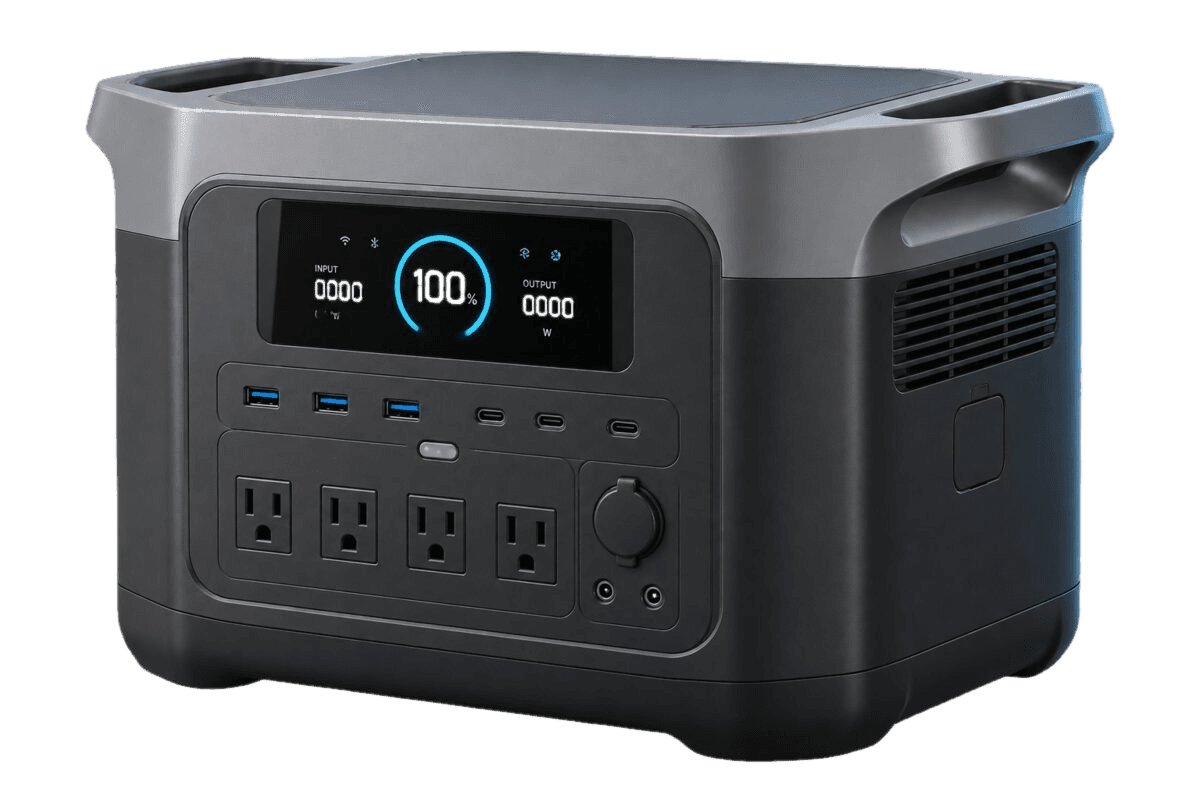
Original illustrative render representing a large portable power station — not an exact photograph of the EcoFlow DELTA 2 Max.

Illustrative image — not an exact product photograph.

Capacity
2,048 Wh
Output
2,400 W
Weight
50.7 lb (23 kg)

Best for: home backup, camping, refrigerator backup

View product
Check Price on Amazon

Price, availability and current rating are shown on Amazon — PowerMatchLab does not display them because we have not independently verified them. As an Amazon Associate we may earn from qualifying purchases.
Largest verified capacity in this shortlist at 2,048 Wh — more stored energy to stretch across a multi-day outage.

Estimated ~11.6 hours running a full-size refrigerator (~150 W average draw) — a planning calculation, not a lab measurement.

Most compact
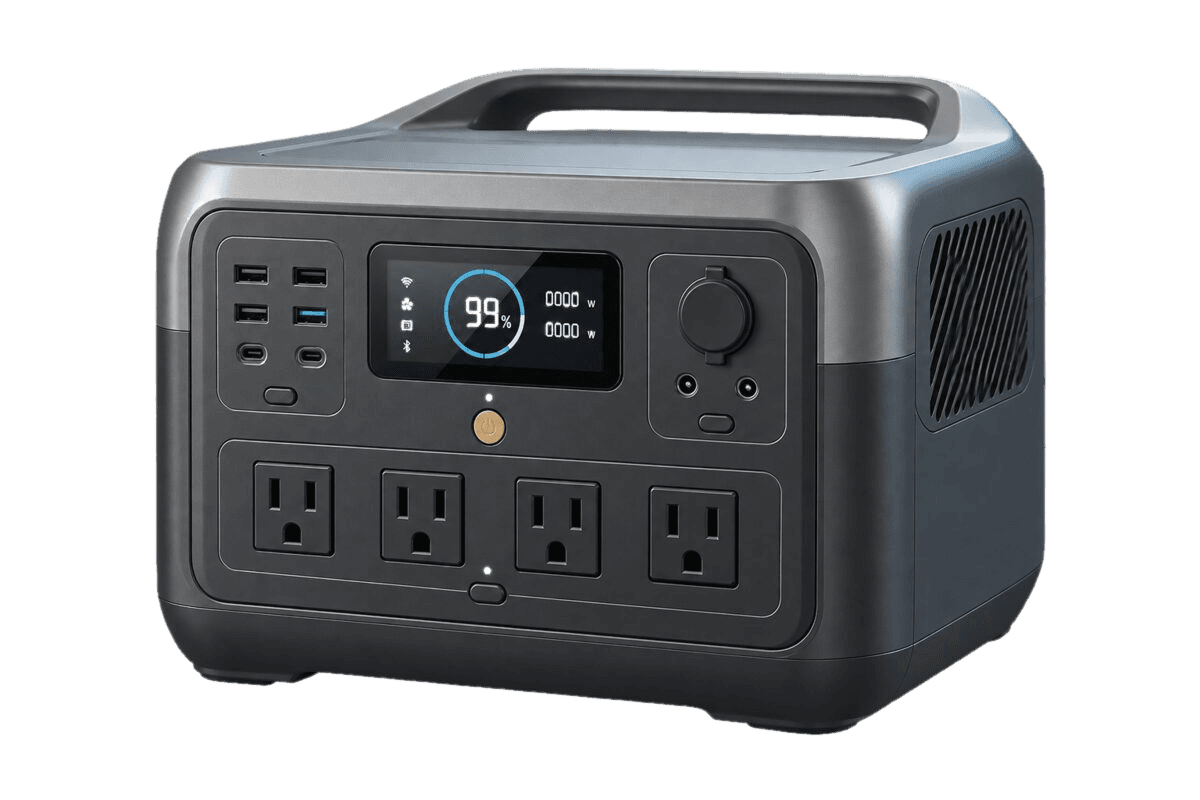
Original illustrative render representing a mid-size portable power station — not an exact photograph of the EcoFlow RIVER 2 Pro.

Illustrative image — not an exact product photograph.

Capacity
768 Wh
Output
800 W
Weight
18.2 lb (8.3 kg)

Best for: camping, road trips, refrigerator backup, light home backup

View product
Check Price on Amazon

Price, availability and current rating are shown on Amazon — PowerMatchLab does not display them because we have not independently verified them. As an Amazon Associate we may earn from qualifying purchases.
Lightest verified unit in this shortlist at 8.3 kg — easier to place, move or store.

Estimated ~4.4 hours running a full-size refrigerator (~150 W average draw) — a planning calculation, not a lab measurement.

Best solar recharge
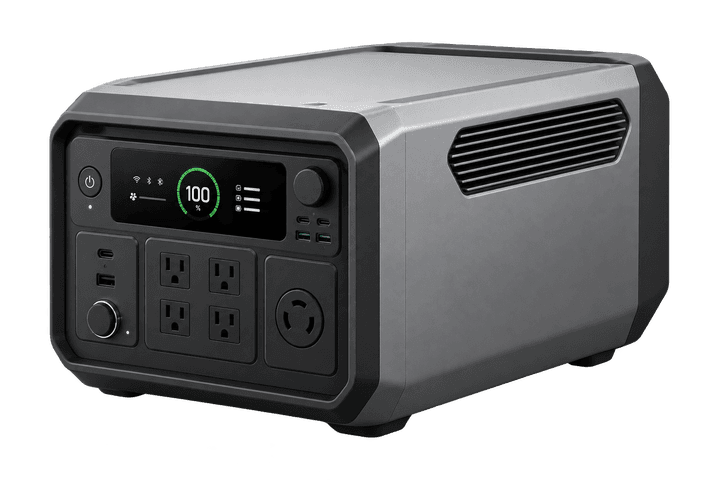
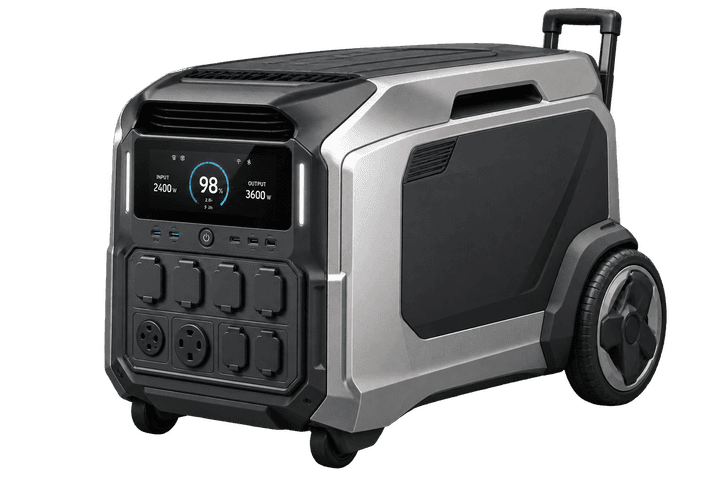
Original illustrative render representing a mid-size portable power station — not an exact photograph of the EcoFlow DELTA 3 Classic.

Illustrative image — not an exact product photograph.

Capacity
1,024 Wh
Output
1,800 W
Weight
26.7 lb (12.1 kg)

Best for: home essentials, refrigerator backup, camping, electronics

View product
Check Price on Amazon

Price, availability and current rating are shown on Amazon — PowerMatchLab does not display them because we have not independently verified them. As an Amazon Associate we may earn from qualifying purchases.
Highest verified solar input in this shortlist at 500 W — recharges faster off-grid during an extended outage.

Estimated ~5.8 hours running a full-size refrigerator (~150 W average draw) — a planning calculation, not a lab measurement.

Shortlist comparison

The top 8 matches for this use, verified specs only. The best value in each row is highlighted.

ModelCapacity (Wh)Rated continuous outputSurge / peak outputWeightSolar input (max)
Anker SOLIX C2000 Gen 22,048 Wh2,400 W4,000 W18.9 kgNot verified
Jackery Explorer 2000 V22,042 Wh2,200 W4,400 W17.9 kg400 W
EcoFlow DELTA 2 Max2,048 Wh2,400 W4,800 W23 kgNot verified
Anker SOLIX S20002,010 Wh1,500 WNot verified16.2 kg400 W
EcoFlow DELTA 3 Classic1,024 Wh1,800 W3,600 W12.1 kg500 W
Jackery Explorer 1000 V21,070 Wh1,500 W3,000 W10.8 kg400 W
BLUETTI AC70768 Wh1,000 W2,000 W10.2 kg500 W
BLUETTI AC1801,152 Wh1,800 WNot verified16 kg500 W
Open full comparison →

What actually matters

Surge headroom
The compressor's inrush current is the moment a too-small unit fails. A surge rating well above the fridge's startup spike is essential.
Usable daily capacity
Plan around 1,000-1,600 Wh per fridge per day — this figure already accounts for the compressor cycling on and off rather than running continuously, which is why it's higher than a naive running-watts × 24 calculation. A 1kWh station covers roughly a day; 2kWh gets you toward two.
Low idle consumption
Over a multi-day outage, a unit that idles at 6-9 W wastes far less than one with high standby draw.
Solar input
A panel that replaces the fridge's daily energy can keep the loop going indefinitely in good weather.

Common mistakes

  • Sizing on running watts (≈150 W) instead of daily energy (often 1,000-1,600 Wh).
  • Buying a compact 300Wh unit that cannot sustain a full-size fridge for more than a couple of hours.
  • Forgetting that opening the door and a warm room both raise energy use sharply.

How we pick for this use

  • Units with verified surge ratings that clear a typical fridge startup rank higher.
  • Higher verified capacity and lower verified idle draw rank higher.
  • Solar input capability is a plus for multi-day scenarios.
The ranking below is derived from products.json using only verified fields. It is not a “we bought and tested these” list. Run the Power Calculator for a recommendation tied to your specific load.

Sizing guides and interactive tools

Also in the catalog

40 more models are in the catalog but not specifically positioned for this use. Browse the full catalog to see all of them with filters, or start with the two closest matches below.

Independent editorial illustration of the EcoFlow DELTA Pro Ultra — not an official manufacturer photograph.

Independent editorial illustration — not an official product photo.

Capacity
6,144 Wh
Output
7,200 W
Weight
Not verified

Best for: home backup, power outages

View product
Check Price on Amazon

Price, availability and current rating are shown on Amazon — PowerMatchLab does not display them because we have not independently verified them. As an Amazon Associate we may earn from qualifying purchases.

Original illustrative render representing a whole-home backup portable power station — not an exact photograph of the EcoFlow DELTA Pro 3.

Illustrative image — not an exact product photograph.

Capacity
4,096 Wh
Output
4,000 W
Weight
Not verified

Best for: whole-home backup, RV, 240V appliances, extended outages

View product
Check Price on Amazon

Price, availability and current rating are shown on Amazon — PowerMatchLab does not display them because we have not independently verified them. As an Amazon Associate we may earn from qualifying purchases.

FAQ

How long will a 1kWh station run my fridge?

As a planning estimate, capacity_wh × 0.85 ÷ daily energy. For a fridge using 1,200 Wh/day, a 1,024Wh unit is roughly three-quarters of a day. Real results vary with the fridge and ambient temperature.

Should I get one big station or two smaller ones?

One larger unit is simpler and usually more efficient. Two smaller units add redundancy and flexibility but cost more per Wh and take more space.

By Bilal Siali · Last updated 2026-09-01. Specifications are manufacturer claims; PowerMatchLab has not physically tested these units.