By Bilal Siali · Last updated September 3, 2026
This is general planning information about sizing and estimating runtime for a portable power station running CPAP equipment — it is not medical advice. For anything related to your therapy itself, follow the guidance of your CPAP manufacturer or durable medical equipment (DME) provider.
Short answer: at a commonly-cited ~40 W CPAP draw (blower plus a modest humidifier setting), a compact ~268-300Wh station typically covers well under one full 8-hour night, a ~1,000Wh-class station covers roughly two to three nights, and a ~2,000Wh-class or larger station can cover five or more nights — but the real number depends entirely on your machine's actual watts, which varies a lot by model and humidifier setting.
CPAP machines draw far less power than a refrigerator, but exactly how much varies a lot by model and by whether a heated humidifier and heated tubing are in use — so the first step is finding your own device's real number rather than assuming one.
Ready to put a number on this for your own setup?
Calculate your CPAP power needs →Key takeaways
- Estimated runtime (hours) = usable capacity (≈85% of rated Wh) ÷ your CPAP's real watts — always check the rating label, never assume a number.
- A heated humidifier and heated hose can add a substantial load on top of the blower alone — check your device's label with the humidifier at your usual setting.
- Startup surge is rarely an issue for CPAP (unlike a fridge) since blower motors are small, but confirm with your device's own spec sheet.
- At ~40 W, a compact ~268-300Wh station covers well under a full night; a ~1,000Wh-class station covers roughly 2-3 nights — see the worked table below.
- This is a planning estimate, not medical guidance — never rely on an untested estimate for a medical necessity; keep a backup plan for extended outages.
Why CPAP power draw varies so much
A CPAP's blower motor alone typically draws a relatively small, steady wattage. A heated humidifier and heated hose, when fitted and switched on, add a separate and often larger load, and how high you set the humidity/heat level changes that further.
That means two people with the "same" CPAP model can have meaningfully different real-world power draw simply based on their humidifier settings — there is no single number that applies to every setup.
Step 1: Find your machine's real power draw
Check the rating label on the underside or back of the CPAP unit, or on its external power supply ("brick"), for watts or VA (volt-amps, roughly comparable to watts for this purpose). The user manual usually lists the same figures, sometimes with separate numbers for the blower alone versus blower plus humidifier.
As one published example, ResMed's own knowledge base lists a typical power draw of about 6.3 W and a peak of about 27 W for its compact AirMini travel CPAP — see the source link below. That figure is specific to that one model and does not represent full-featured CPAPs with a heated humidifier, which draw more. Always use your own device's label rather than another model's number.
If your machine has a separate DC (car-style) power cord, its listed DC wattage is often close to what a power station's AC output would deliver for the same settings, but check both the AC adapter's rating and any DC cord rating if you have one, since manufacturers sometimes list them differently.
Surge is usually a non-issue, but check anyway
Unlike a compressor-driven appliance such as a refrigerator, most CPAP blower motors are small and do not have a large startup surge. Most power stations handle a CPAP's continuous watts with plenty of room to spare on the surge side.
Still, check your specific model's spec sheet if it lists a surge or peak figure, and don't assume — "usually fine" is not the same as verified for your exact machine.
Step 2: Size capacity for the number of nights you need
The math is the same method used throughout PowerMatchLab: nightly energy (Wh) = device watts × hours of use. For CPAP, "hours of use" is simply how long you sleep with it running.
Worked example: a machine that draws 40 W with the humidifier on, used for 8 hours, uses 320 Wh that night. Applying the standard 85% usable-energy assumption and 20% reserve headroom used across PowerMatchLab: 320 ÷ 0.85 × 1.2 ≈ 452 Wh minimum recommended capacity for one night, before anything else you plan to run from the same station.
For multiple nights without recharging — camping, travel, or a power outage — multiply the nightly figure by the number of nights first, the same way the refrigerator and general sizing guides do.
Turning that around into estimated runtime (usable capacity ÷ device watts) at the same 40 W draw, across capacity classes now in the PowerMatchLab catalog:
- ~268Wh-class (e.g. a compact unit): 268 × 0.85 ÷ 40 ≈ 5.7 hours — well under one full 8-hour night
- ~1,000Wh-class: 1,000 × 0.85 ÷ 40 ≈ 21.3 hours — roughly 2-3 nights
- ~2,000Wh-class: 2,000 × 0.85 ÷ 40 ≈ 42.5 hours — roughly 5 nights
- ~4,100Wh-class (the largest currently listed): 4,100 × 0.85 ÷ 40 ≈ 87.1 hours — roughly 11 nights
AC power type matters for some CPAP setups
All PowerMatchLab-listed stations output pure sine wave AC. Many CPAP manufacturers recommend or require pure sine wave power, particularly for machines with a heated humidifier, since a stepped or "modified" sine wave can cause heating elements or electronics in some devices to behave unpredictably or trigger a fault.
If you plan to run your CPAP from any power source while traveling, confirm compatibility in your device's manual rather than assuming — this matters more for older or non-CPAP-specific inverters than for the stations reviewed here, but it's worth the two-minute check.
Planning for outages if you depend on CPAP nightly
If you use CPAP therapy every night, a compact station sized for a few nights of runtime is a reasonable baseline for most outages, with the option to recharge from a car or solar panel to extend coverage further.
Keep the math conservative: size for your humidifier-on, worst-case wattage rather than the blower-only minimum, so an unexpectedly long outage doesn't catch you short partway through the night.
Put a number on it
Related products
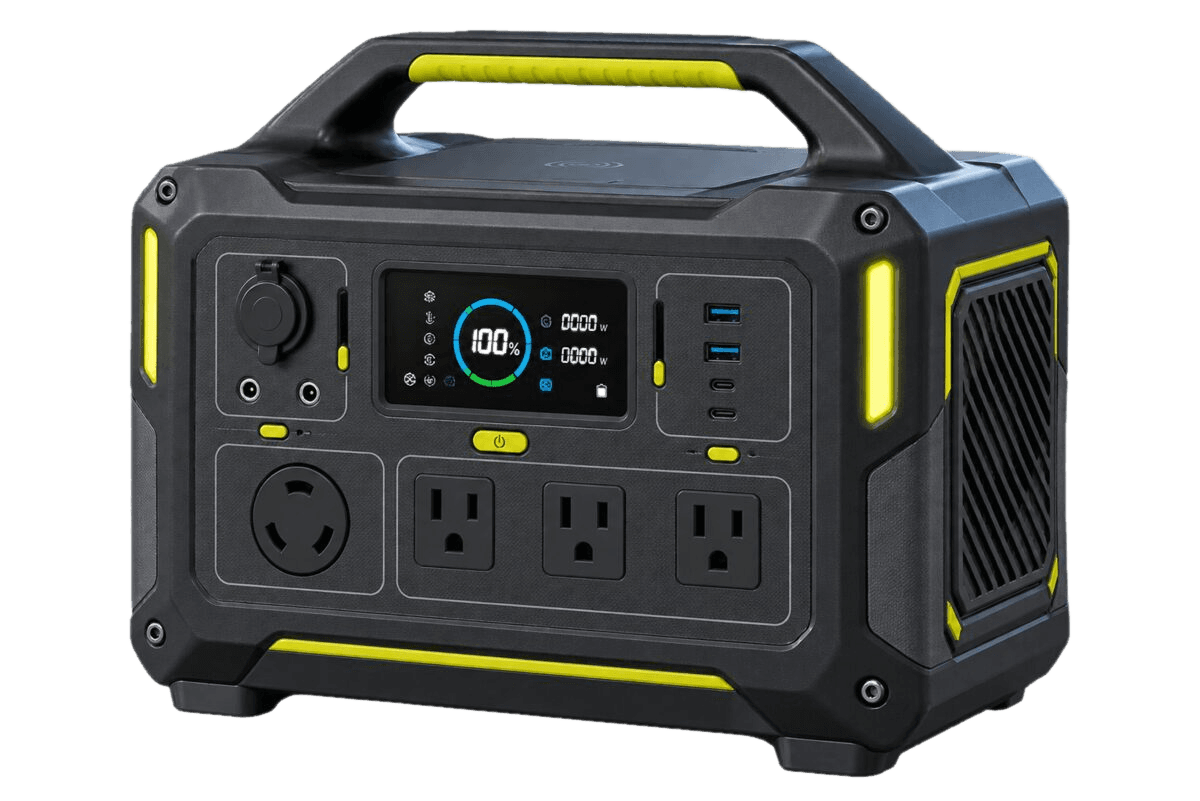
Illustrative image — not an exact product photograph.
- Capacity
- 828 Wh
- Output
- 1,000 W
- Weight
- 37.4 lb (17 kg)
Best for: camping, travel, home backup
Price, availability and current rating are shown on Amazon — PowerMatchLab does not display them because we have not independently verified them. As an Amazon Associate we may earn from qualifying purchases.
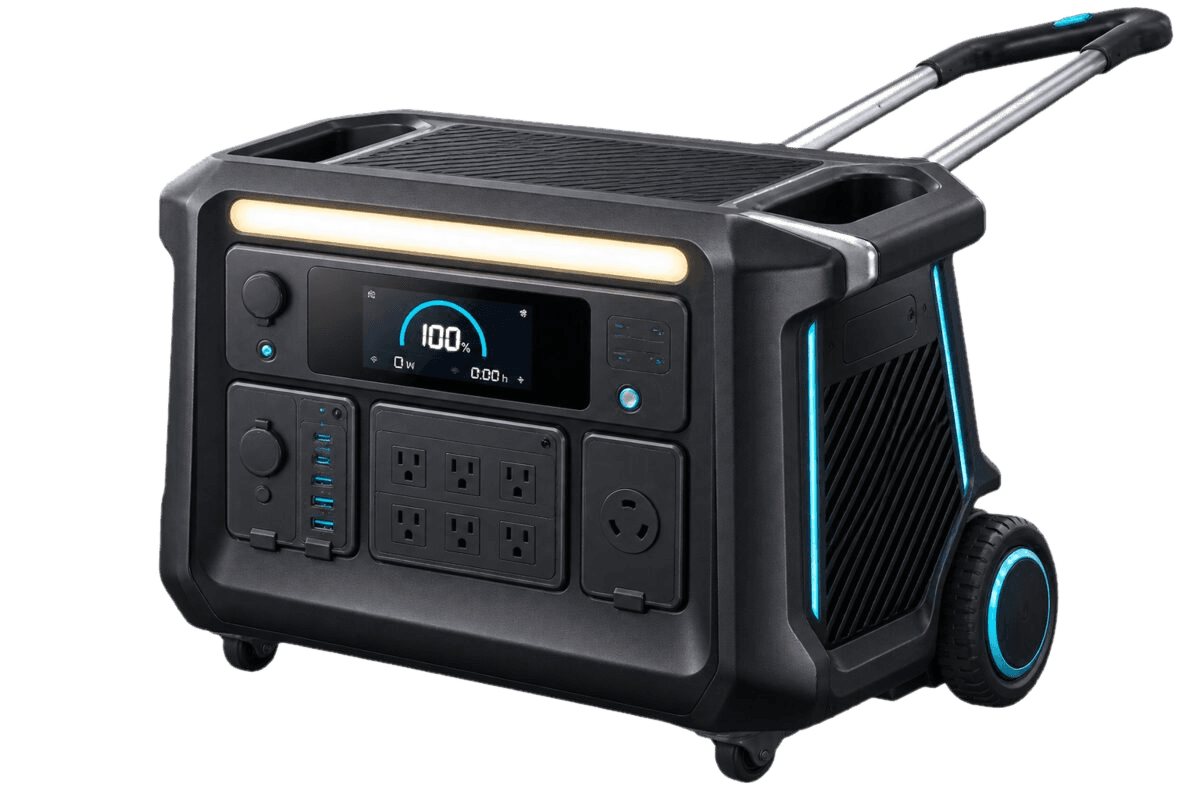
Illustrative image — not an exact product photograph.
- Capacity
- 2,048 Wh
- Output
- 2,400 W
- Weight
- 45.2 lb (20.5 kg)
Best for: home backup, RV use, CPAP use, camping
Price, availability and current rating are shown on Amazon — PowerMatchLab does not display them because we have not independently verified them. As an Amazon Associate we may earn from qualifying purchases.
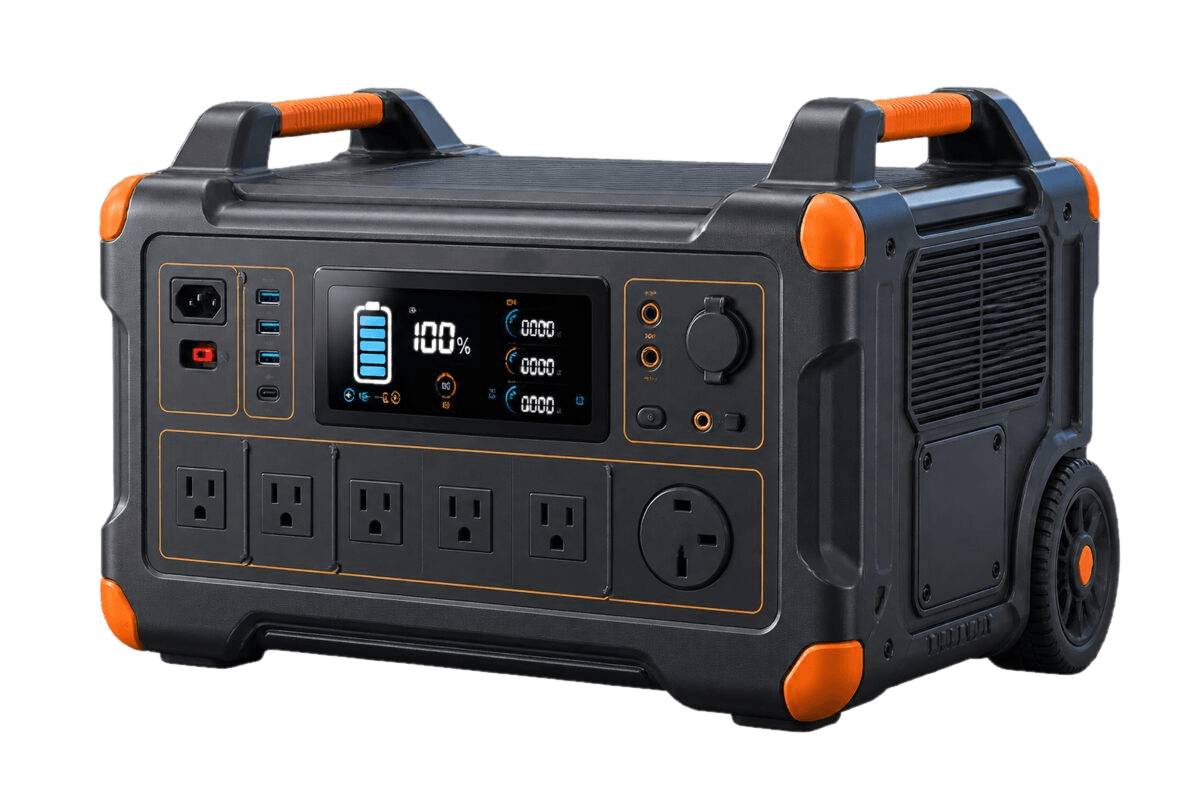
Illustrative image — not an exact product photograph.
- Capacity
- 3,072 Wh
- Output
- 3,600 W
- Weight
- 79.4 lb (36 kg)
Best for: home backup, RV use, CPAP use, emergency backup
Price, availability and current rating are shown on Amazon — PowerMatchLab does not display them because we have not independently verified them. As an Amazon Associate we may earn from qualifying purchases.
Related guides
FAQ
How long will a power station run my CPAP?
Divide the station's usable capacity (roughly 85% of its rated Wh) by your machine's real watts to get hours of runtime, then compare that to your typical hours of use per night. The Power Calculator does this math once you enter your device's real numbers.
Does the heated humidifier really change things that much?
It can. A humidifier and heated hose add a separate load on top of the blower, and how high you set the heat changes it further — check your own device's label with the humidifier at your usual setting, not just the blower-only figure.
Can I run my CPAP from a power station's DC output instead of AC?
Some CPAP machines accept DC input directly via a separate cord, which skips the inverter stage and can be marginally more efficient. Check whether your model supports this and what cord it requires; if not, the AC outlet is the standard path.
Is this guide medical advice?
No. It only covers electrical sizing for a power station. For anything related to your prescribed therapy, settings, or what to do during an equipment interruption, follow the guidance of your CPAP manufacturer or DME provider.
Sources
- ResMed — How much power does the AirMini machine draw?
- Individual CPAP manufacturer manuals and rating labels (device-specific — verify your own model)
Last updated September 3, 2026. This guide is educational and general; it does not assert product-specific performance beyond what products.json verifies. As an Amazon Associate, PowerMatchLab earns from qualifying purchases made through the Amazon links on this page — see the disclosure.