By Bilal Siali · Last updated September 1, 2026
Short answer: recommended minimum capacity (Wh) ≈ (your daily energy use in Wh × days of autonomy) ÷ 0.85 usable-energy factor × 1.2 reserve factor. There is no single "right" watt-hour number that applies to everyone — it depends entirely on what you plan to run and for how long.
Sizing a power station really comes down to two independent questions: can it deliver enough power at once (watts), and can it store enough energy for how long you need it (watt-hours).
This guide walks through both, using the same method as the PowerMatchLab Power Calculator so you can sanity-check its output.
Key takeaways
- Recommended capacity ≈ (daily energy Wh × days of autonomy) ÷ 0.85 usable-energy × 1.2 reserve headroom.
- List every device's real running watts and hours/day first — from a rating label, manual, or plug-in energy meter, never a guess.
- Watt-hours (capacity) and watts (output) are separate questions: capacity says how long, output says whether it can start the device at all.
- Add the largest single startup surge on top of everything else running, and check it against the station's surge rating.
- The Power Calculator runs this exact formula against your own device list and shows which catalog products actually clear it.
Watts vs. watt-hours
Watts (W) measure instantaneous demand — how much a device pulls while it runs. Watt-hours (Wh) measure energy over time — watts multiplied by hours.
A power station has a rated continuous output in watts and a battery capacity in watt-hours. You need the output to be at least as large as everything you run simultaneously, and the capacity to be large enough to cover total energy use before you can recharge.
Step 1: List every device and its running watts
Write down each device you want to power, its running watts, how many of them, and how many hours per day each runs. Nameplate labels, the manufacturer's spec sheet, or a plug-in power meter are the best sources.
Motor-driven devices (fridges, pumps, power tools) also have a startup surge that is much higher than their running watts, often two to three times, for a fraction of a second.
Step 2: Estimate daily energy
For each device: running watts × quantity × hours per day = watt-hours per day. Add them up for a daily total.
Refrigerators are the classic trap: a fridge might draw 150 W while the compressor runs, but the compressor is only on part of the time, so real daily energy is often 1,000-1,600 Wh, not 150 W × 24 h.
Step 3: Convert energy demand into required capacity
Batteries do not deliver 100% of their nameplate energy to your devices. Inverter and conversion losses mean roughly 80-90% is usable in practice; PowerMatchLab plans with 85%.
It is also unwise to run a battery flat every cycle. Adding around 20% reserve headroom protects cycle life and covers estimate error.
So: recommended minimum capacity ≈ (daily energy × days) ÷ 0.85 × 1.2.
Step 4: Check continuous and surge output
Add the running watts of everything that could be on at the same time — that is your required continuous output.
Then take the single largest startup surge and add it on top of the rest running. If the power station's surge (peak) rating is below that number, large motors may trip it even if daily energy is fine.
Special cases: 240V, RV, and expansion
Some well pumps, ranges and EV chargers need 120/240V split-phase output. Only a few large stations provide it natively.
RV owners often want a TT-30 (30A) outlet so they can plug the rig's shore cord straight in.
If your needs might grow, an expandable platform lets you add battery capacity later instead of buying a second unit.
Put a number on it
Related products
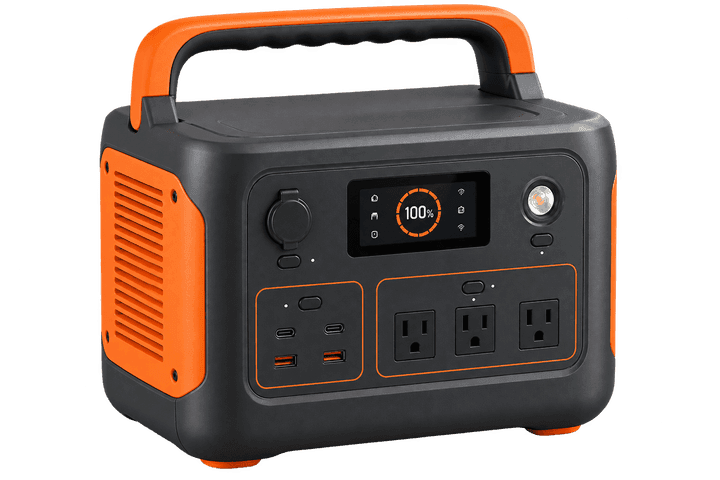
Illustrative image — not an exact product photograph.
- Capacity
- 1,070 Wh
- Output
- 1,500 W
- Weight
- 23.8 lb (10.8 kg)
Best for: camping, road trips, RV electronics, refrigerator backup
Price, availability and current rating are shown on Amazon — PowerMatchLab does not display them because we have not independently verified them. As an Amazon Associate we may earn from qualifying purchases.
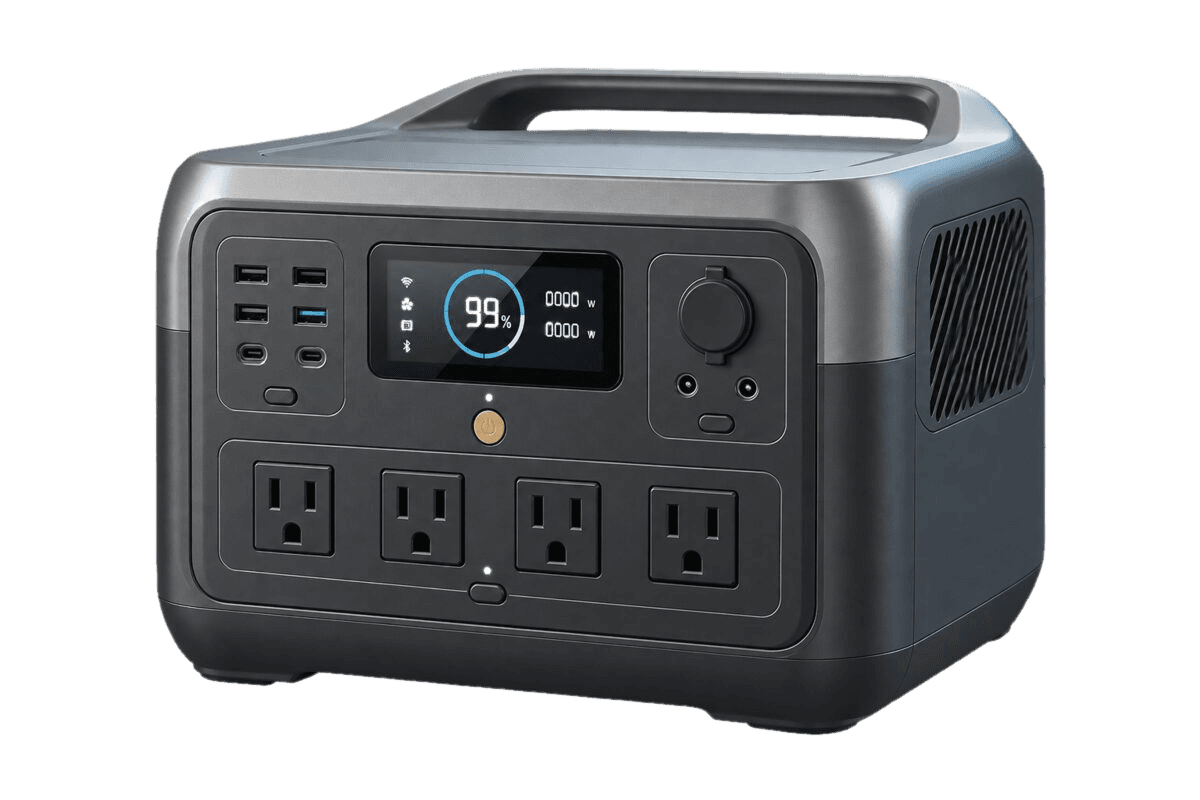
Illustrative image — not an exact product photograph.
- Capacity
- 768 Wh
- Output
- 800 W
- Weight
- 18.2 lb (8.3 kg)
Best for: camping, road trips, refrigerator backup, light home backup
Price, availability and current rating are shown on Amazon — PowerMatchLab does not display them because we have not independently verified them. As an Amazon Associate we may earn from qualifying purchases.
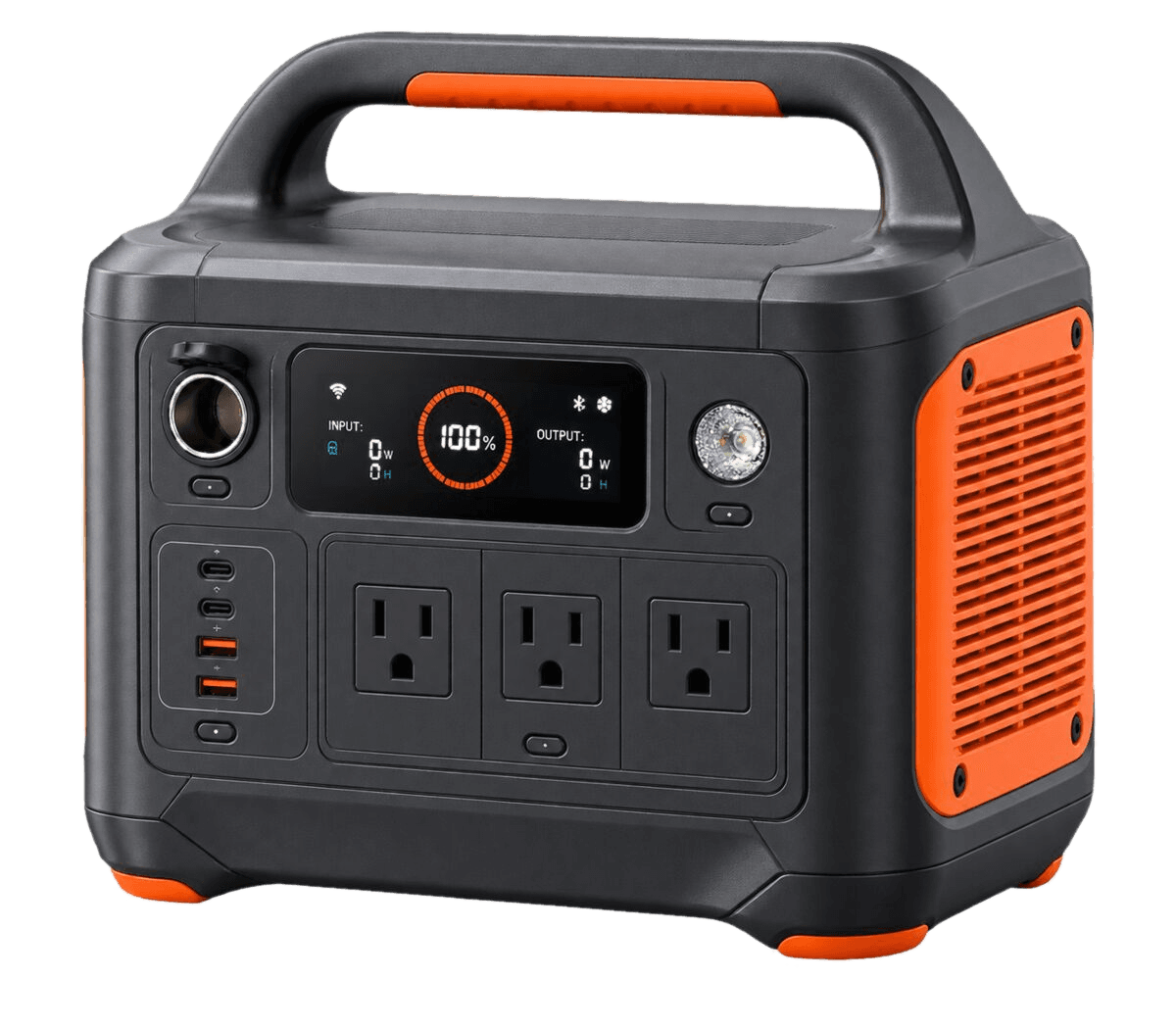
Illustrative image — not an exact product photograph.
- Capacity
- 1,024 Wh
- Output
- 2,200 W
- Weight
- 35.7 lb (16.2 kg)
Best for: home backup, high-draw appliances, emergency backup
Price, availability and current rating are shown on Amazon — PowerMatchLab does not display them because we have not independently verified them. As an Amazon Associate we may earn from qualifying purchases.
Related guides
FAQ
Is a bigger power station always better?
No. Oversizing adds weight, cost and charging time you may not need. The goal is enough capacity to cover your energy demand with sensible reserve, and enough output for your simultaneous load.
How many days of backup should I plan for?
It depends on whether you can recharge. If you have solar or can reach grid power daily, one day of autonomy may be enough. For outages with no recharge option, plan for the longest realistic gap.
Do I need to match surge watts exactly?
You need the station's surge rating to be at least your estimated peak. Some headroom is good; matching to the watt is not necessary.
Sources
- U.S. Department of Energy — Estimating Appliance and Home Electronic Energy Use
- Manufacturer-published specifications, attributed by brand in products.json
Last updated September 1, 2026. This guide is educational and general; it does not assert product-specific performance beyond what products.json verifies. As an Amazon Associate, PowerMatchLab earns from qualifying purchases made through the Amazon links on this page — see the disclosure.